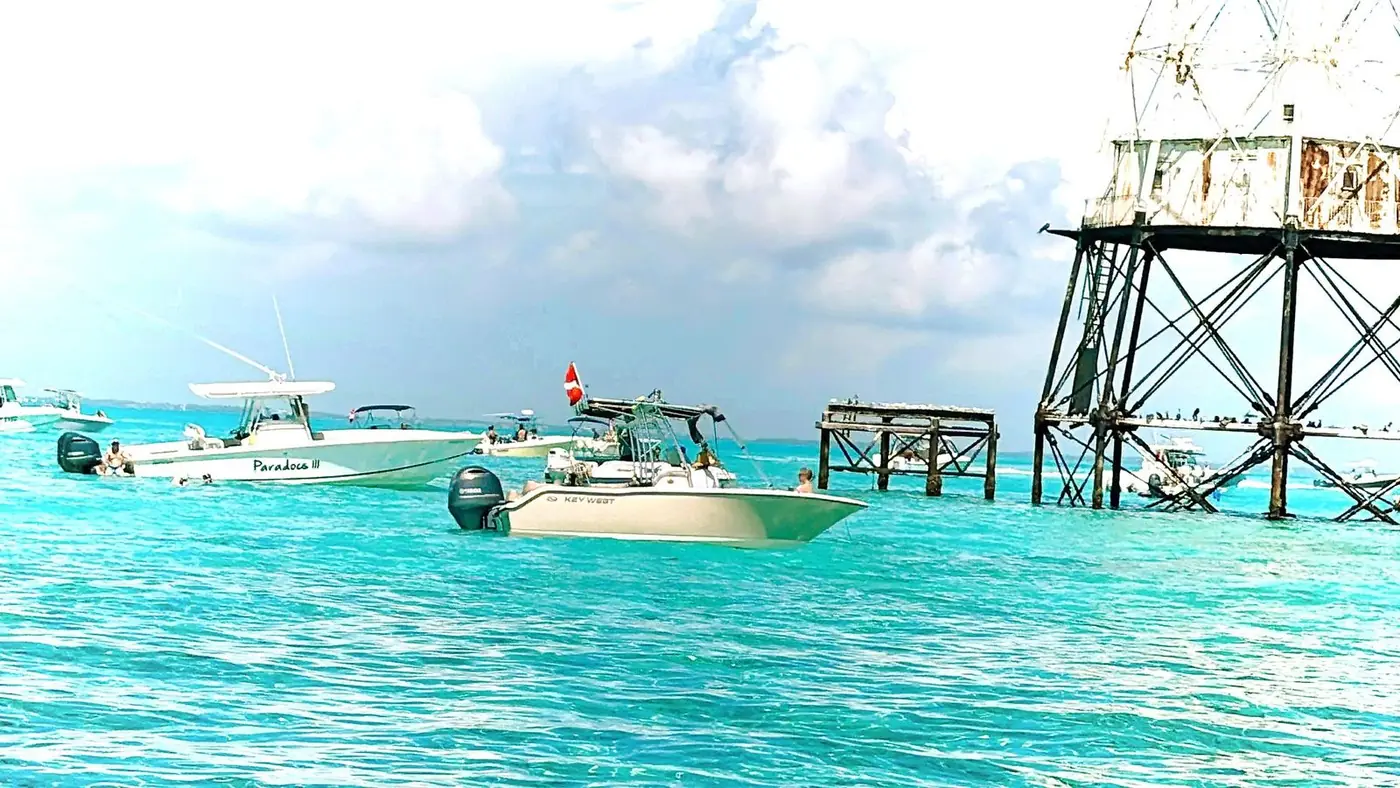
Alligator Reef Lighthouse is an iron screw-pile lighthouse on the offshore reef line, about four nautical miles southeast of Islamorada. It was first lit in 1873, sits inside the Florida Keys National Marine Sanctuary, and is one of the most accessible offshore snorkel spots in the Keys. From the dock at Breezy Palms marina, the run is roughly 10 minutes by boat.
The lighthouse takes its name from the USS Alligator, a U.S. Navy schooner that ran aground on the reef in November 1822 while chasing pirates in the Florida Straits. The wreck made the reef a known hazard, and a series of beacons and unmanned lights followed before the current structure was commissioned.
Construction of the iron lighthouse began in 1870 and the light was first lit in 1873. The design is an open-frame screw-pile: wrought-iron piles drilled into the coral rock, with the keepers' quarters and the lantern room raised above the water on the frame. For details on the construction and active history, see the Wikipedia entry on Alligator Reef Light.
The lighthouse sits inside the Florida Keys National Marine Sanctuary, established in 1990. The sanctuary protects the surrounding coral and seagrass, and sets the rules for how boats can anchor and how snorkelers can interact with the reef. Tying off to one of the three sanctuary mooring buoys keeps anchors and chains off the living coral.
From the dock at Breezy Palms Resort marina at Mile Marker 80, the run to the lighthouse takes about 10 minutes in any of our rental fleet. The course is southeast, outside the Hawk Channel reef line, in open Atlantic water. We check the marine forecast with you at the dock before you head out. Morning trips tend to have lighter wind and calmer seas; afternoon thunder builds in summer and can move fast.
Three sanctuary mooring buoys sit around the lighthouse base. They're first-come. If you want a spot on a busy summer weekend, leaving the dock early helps. We mark them on the chart for you during the orientation.
The water around the lighthouse is shallow, roughly 4 to 10 feet at the buoys. Visibility runs 30 to 80 feet most days. Tides are mild on the reef line, so timing isn't as critical as it is on the bay-side sandbar.
The Alligator Reef area is one of the best beginner-friendly snorkel spots in the Florida Keys. Hawksbill and loggerhead turtles, parrotfish, sergeant majors, French angelfish, blue tang, and the occasional nurse shark are regular. In summer you can see schooling tarpon. Coral is a mix of hard and soft, with brain coral and sea fans common at the buoys.
Bring mask, fins, and a snorkel. Reef-safe sunscreen only; the sanctuary asks visitors to avoid oxybenzone and octinoxate to protect the corals. Don't stand on coral, don't break off pieces, and stay clear of fishing line you might see in the water.
April through October is the best window. May, June, and September tend to give the calmest seas and the clearest water. July and August are warmer with stronger sun. October starts to cool off and the visibility holds. Winter cold fronts can shut a day or two of fishing or snorkeling on the reef line, with wind from the north pushing chop into Hawk Channel — that's the only em-dash you'll see on this page, and it's the one weather condition worth planning around.
If the wind is forecast above 15 knots from the east or north, the run to the lighthouse gets bumpy and the buoys can be uncomfortable. We'll tell you that before you leave the dock. The bay-side sandbar is usually a better call on those days.
Live availability and rates through Peek. Half-day, full-day, or full week. Departs from Breezy Palms marina, Mile Marker 80.
Book a Boat →